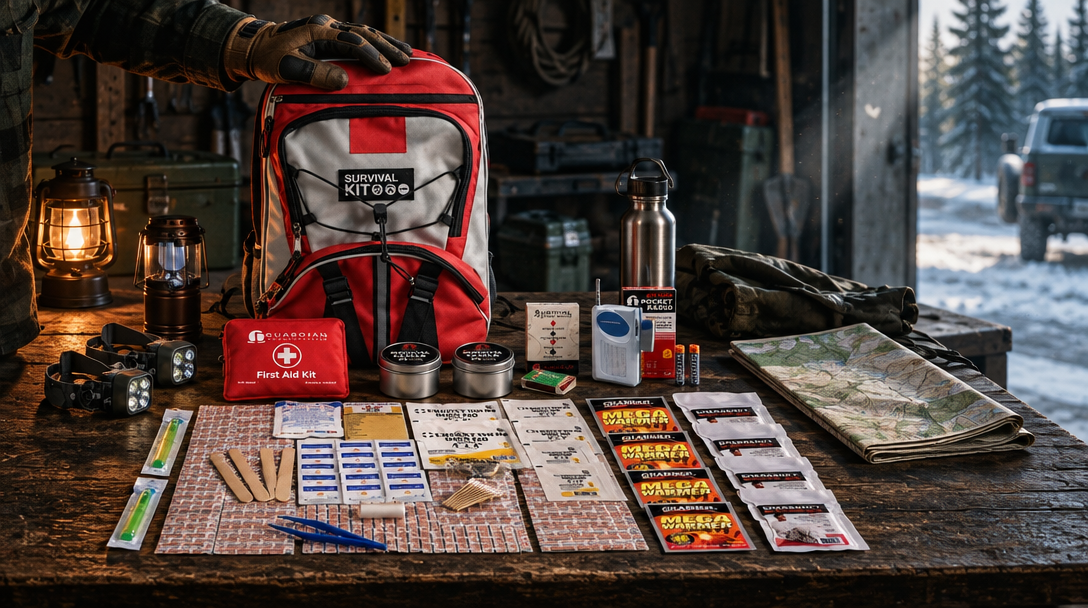
Most emergency kits get built once, shoved in a closet, and never opened again. Then the power goes out, the road washes out, or the water main breaks, and the kit turns out to be a bag of expired granola bars and a flashlight with dead batteries.
A real 72-hour kit is not a shopping list. It is a small, working system you can grab in the dark and carry out the door. Build it once, check it twice a year, and stop thinking about it.
What 72 hours is actually for
Three days is not a survival timeline pulled out of thin air. It is the window where most households are on their own before aid, utilities, or family help arrive. That changes what you pack. You are not bugging out to the wilderness. You are getting through a bad night in a house with no power, a car stuck on a closed highway, or a sudden evacuation order with ten minutes of warning.
Pack for those three situations first. Wilderness kits are a different job.
Organize around four jobs, not a gear list
Any pile of gear works if you can answer four questions in the dark. Water. Warmth. Light. Medical. Everything else is a bonus.
1. Water and food
The accepted baseline is one gallon of water per person per day. That is for drinking and basic hygiene, and it adds up fast: three days for four people is twelve gallons, which is why most kits carry a mix of stored water and a way to treat more.
Food should be shelf-stable, calorie-dense, and require no cooking if the power is out. Shelf-stable meals and ration bars do that job. A small metal pot and a lighter still earn their space, but never as the only plan.
2. Warmth and shelter
Assume the heat is off and the night is colder than you expected. You need a dry layer, a way to stay off cold ground, and something that blocks wind and rain. A waterproof shelter that goes up fast beats a tent that takes twenty minutes in the dark, and a pop-up shelter that sleeps four covers a family without a fight.
3. Light and communication
Two independent light sources per adult, spare batteries, and a radio that does not depend on a cell tower. In an outage, the phone becomes a flashlight that dies. A pair of rugged two-way radios keeps a household in contact across a neighborhood or a camp, and a battery-powered receiver keeps you informed when the network does not.
Write down phone numbers, meeting points, and a out-of-area contact on paper. Phones fail. Paper does not.
4. First aid and trauma
A kit of adhesive bandages is not a first aid plan. You want a broad kit that covers cuts, burns, blisters, sprains, and bleeding, packed so you can find anything by touch. Check expiration dates yearly and replace what you use.
Gear does not replace training. A basic first aid and CPR course is the highest-value item in any kit, and it never expires in a closet.
A kit that is already assembled and organized
Assembling a proper kit from scratch takes a weekend of research and a lot of half-empty packaging. The Family Blackout Kit is built around a multi-pocket hikers backpack, hand-assembled in the USA, with components organized into waterproof bags: light and communications, shelter and warmth, first aid, and other survival supplies. It is a working starting point you can extend rather than a pile of parts you have to sort out during an emergency.
For vehicles and field use, a dedicated trauma and first aid bag in high-visibility orange, like the 80 Piece First Responder Kit, gives you a single grab-and-go medical layer that does not need to be repacked into the household kit.
What to leave out
The closet kit fails because it is packed with things that look sensible and work badly.
- Candles. Open flame indoors during a gas leak or an outage is a bad trade. Use a headlamp.
- Giant survival knives. One dependable fixed blade does every field job. More knife is not more prepared.
- Canned food with no can opener. Count how many of your items need a tool you did not pack.
- Anything that needs a phone to work. Apps, QR codes, cloud-stored documents.
- Cheap batteries. They leak, and they fail when they are needed.
Pack it so you can carry it
Split the kit into three layers:
- On your body: light, knife, phone, ID, cash, medication.
- The grab bag: 72 hours of water, food, warmth, medical, and comms for the whole household. One person should be able to move it alone.
- The vehicle layer: spare water, blankets, tools, and a first aid bag that stays in the truck.
If the main bag takes two adults to lift, it will not leave the house.
Check it twice a year
Put two dates on the calendar: when the clocks change, or the first weekend of spring and fall. Open the bag. Replace expired food and medication. Test every light and radio. Repack it the way you found it, because in the dark you will be reaching for muscle memory, not reading labels.
Common questions
Does a 72-hour kit need a weapon? No. It needs water, warmth, light, and medical supplies. Self-defense choices are personal and separate from an emergency kit.
Can I use a camping kit as an emergency kit? Partly. Camping gear covers shelter and cooking, but usually misses water storage, medication, documents, and household comms.
How much water is enough? One gallon per person per day as a minimum, plus water for pets and any medical needs.
Should every family member have their own kit? Every adult should carry a small personal layer. The household bag stays together.
The bottom line
Build the kit around four jobs, keep it light enough to carry, and check it twice a year. Awareness, preparation, and practice beat gear every time, and a kit you have opened and repacked is worth more than one you have never touched.